Boutique Hotel Marketing in India: A Practical Plan
A measurable marketing plan for Indian boutique hotels built around positioning, demand capture, proof, direct conversion, and repeat stays.
Quick answer
Boutique hotel marketing works when a property defines the stay it is best for, proves that promise with current operational detail, captures existing demand on search and OTAs, and gives qualified guests a clear direct-booking path. Measure confirmed contribution and repeat demand rather than copying reach or engagement benchmarks.
Editorial note: Reviewed on 18 August 2026. Platform features, booking-link eligibility, distribution terms, and advertising availability change; confirm current account controls and property contracts before implementation.

📖 On this page (Table of Contents) ▼
How should a boutique hotel in India market itself?
Start with a narrow, truthful stay promise: who the property is for, why the location and experience fit that guest, and what makes the stay materially different. Then make that promise consistent across Google, OTAs, the official website, social profiles, sales scripts, and on-property delivery.
The goal is not to appear distinctive in copy while the booking journey remains generic. Guests need enough evidence to decide, a working route to live availability, and terms they can understand before payment.
Define the stay the property can own
Use reservation reasons, review themes, call notes, and lost-enquiry reasons to complete this sentence:
For [guest and occasion], the hotel is a strong choice because [specific stay advantage], supported by [proof].
A heritage hotel may be strongest for a cultural weekend, a design hotel for a city break, and a small nature retreat for a quiet family stay. Avoid claiming to be ideal for couples, families, corporate groups, weddings, and wellness travellers unless operations can serve each segment.
Build proof around booking questions
Create a simple evidence inventory:
| Guest question | Proof to publish | Owner |
|---|---|---|
| What is each room actually like? | current labelled room and bathroom set | rooms and marketing |
| Is the location suitable? | map context, travel assumptions, local guide | front office |
| What is included? | package inclusions and exclusions | revenue and F&B |
| Can the hotel meet a specific need? | accessibility, dietary, child, event or work details | operations |
| Is booking direct credible? | live availability, total price, policy, secure payment, contact identity | revenue and technology |
Update this evidence when rooms, inclusions, policies, or access change. Guest-generated content can support the story, but obtain permission and do not edit it into a claim the guest did not make.
Capture search and map demand
Verify the hotel’s Google Business Profile and keep the website, phone, category, location, and hotel attributes accurate. Google’s hotel profile guidance requires verification to manage hotel information on Search and Maps.
Where business links are available, use a crawlable, relevant booking URL and set the preferred direct link when the interface allows it. Google notes that submitted links may be checked for validity and relevance, so do not route a booking action to a generic or blocked page.
Create serviceable local pages around real demand such as a wedding stay, design weekend, remote-work stay, or a specific nearby attraction. Each page needs original decision detail, not a city name inserted into a common template.
Use OTAs as evidence and distribution channels
Keep room names, occupancy, bed configuration, photos, amenities, policies, taxes, and live inventory aligned across channels. Track OTA cost from the property’s own statements, including programme and promotional deductions, instead of relying on a generic commission percentage.
The useful comparison is cancellation-adjusted contribution by channel and stay pattern. A channel with higher acquisition cost may still be valuable for a new feeder market or low-demand dates; a low-cost channel can still underperform if it produces poor-fit enquiries or failed payments.
Convert qualified guests on the official site
Every campaign should land on the relevant room, package, or stay-purpose page. The page should show:
- the answer to the visitor’s main question near the top;
- current, accurately labelled visual proof;
- live availability or a clear next step;
- selected dates and room carried into booking when possible;
- total price, taxes, fees, inclusions, and cancellation terms;
- one direct advantage with clear eligibility and fulfilment conditions;
- an official contact route for unresolved questions.
Measure page-to-booking-engine clicks, booking completion, confirmed value, cancellations, payment failures, and contribution. Do not treat social reach or WhatsApp conversation count as reservations.
Build repeat demand with permission
Ask guests whether they want future communication and record the permission source. Segment by stay purpose and demonstrated interest, not broad demographic guesses. Send fewer, more relevant messages and provide an obvious unsubscribe route.
Useful repeat campaigns are triggered by a reason: a relevant season, a previous stay pattern, a new experience, or a date the guest chose to share. Suppress inactive and unsubscribed contacts before scaling frequency.
Run a 90-day operating plan
Choose one confirmed constraint from our hotel and resort marketing ideas library, then use its practical steps and verification method as a task within this plan.
- Weeks 1–2: reconcile property facts, policies, photos, links, and analytics.
- Weeks 3–4: publish one high-intent page and fix the direct booking handoff.
- Weeks 5–8: run one channel test with tagged links and a defined audience.
- Weeks 9–12: compare confirmed contribution, cancellation, and fulfilment; keep, revise, or stop the test.
Sources and references
- Get started with a hotel Business Profile, Google Business Profile Help.
- Business links policies and guidelines, Google Business Profile Help.
- Photo recommendations and best practices, Google Hotel Center Help.
Is Your Hotel's Digital Presence Working for You?
❓Frequently Asked Questions
About the Author
The ScaleMyHotel editorial team publishes practical guidance for independent hotels. Articles separate definitions from recommendations, label illustrative examples, and are reviewed against the cited sources and the product or platform interfaces available at the time of publication.
More Hotel Growth Guides
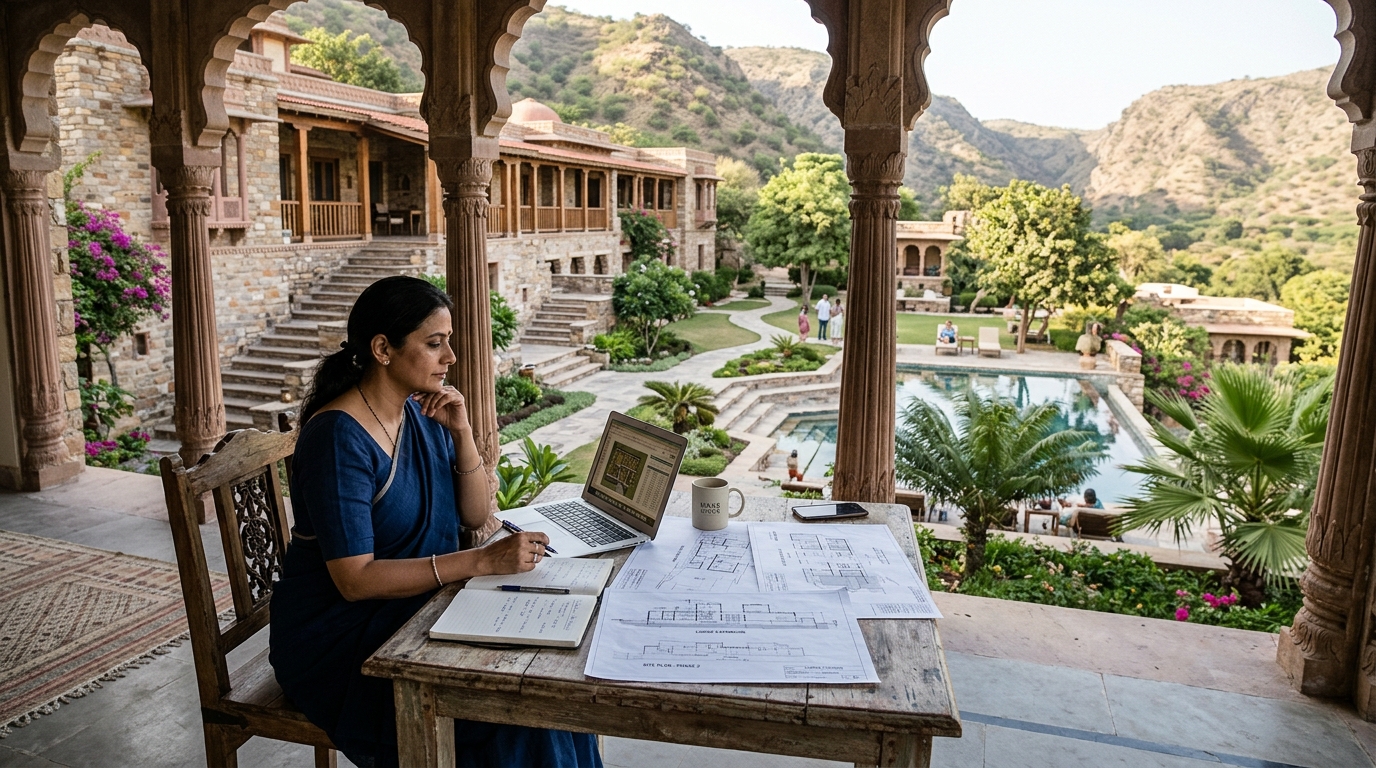
Should You Build a Boutique Hotel in India? A Practical 6-Part Opportunity Test
A practical six-part framework for evaluating a boutique hotel, resort, villa or hospitality conversion in India, including an illustrative 12-room break-even model.

Attract International Hotel Guests to India
Position your Indian boutique hotel or heritage resort to attract high-ADR inbound travelers from North America, Europe, and the Middle East.

Bali Villa Marketing for More Direct Bookings
Build qualified direct demand for a Bali villa while measuring channel contribution and preserving useful OTA demand.

Hotel Instagram Marketing in India: A Booking Funnel
Turn original hotel content and profile proof into qualified Instagram enquiries, then measure confirmed bookings.

Hotel Email Win-Back Sequences That Respect Consent
A practical hotel email framework for abandoned bookings and past-guest win-back campaigns with consent, suppression, and contribution measurement.

Hotel Photography Checklist for OTAs and Websites
Plan hotel photography for factual OTA evidence, website storytelling, accessibility, usage rights, and web performance.